Source bmw cas4 5m48h cgdi adapter for BMW Diagnostics, ECU Programming, and Key Coding
Find 30 listings for the bmw cas4 5m48h cgdi adapter to compare specifications like package size, voltage, and warranty. Buyers can evaluate options from various suppliers to identify the right tool for BMW CAS4 5M48H applications.
Key considerations
Products List
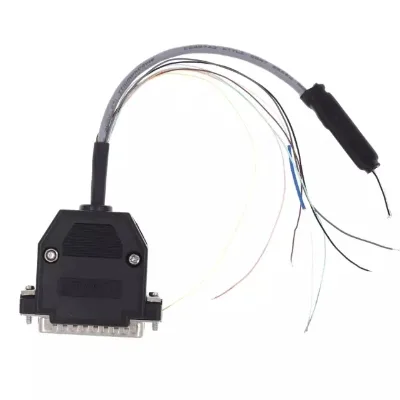
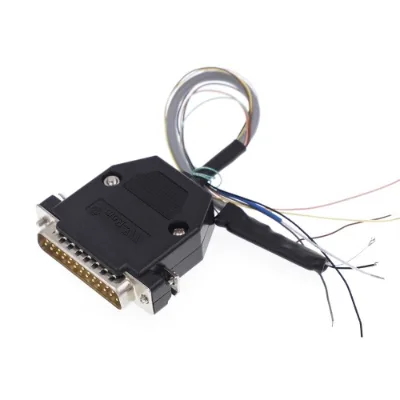
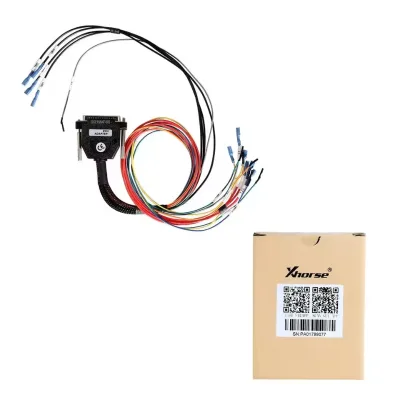






Comprehensive Sourcing Guide
Strategic Sourcing Guide for BMW CAS4 5M48H CGDI Adapters
Understanding the Technical Landscape of OBD Adapters
The procurement of automotive diagnostic tools, specifically those targeting the BMW CAS4 5M48H architecture, requires a precise understanding of the underlying hardware and software compatibility. The core keyword "bmw cas4 5m48h cgdi adapter" points to a specialized category of OBD cables and adapters designed to interface with specific immobilizer and engine management systems. These devices are not generic connectors; they are engineered to facilitate complex operations such as reading CAS4 data without the need for demoulding, a critical feature for locksmiths and automotive technicians working on high-security BMW vehicles.
The product attributes observed in the market indicate that these adapters often operate at a standard 12V voltage, consistent with automotive electrical systems. The communication interface is universally defined as OBD, ensuring compatibility with standard vehicle ports. However, the specific utility of the adapter lies in its ability to support the CGDI (CGDI Prog) platform, particularly the new design of the CG Pro 9S12. Buyers must verify that the adapter they source is explicitly compatible with the "New DB25 Adapter" model number, as legacy versions may not support the latest firmware requirements. The device is classified as a Code Reader, yet its function extends beyond simple error code retrieval to include deep system programming and key matching operations.
A critical technical observation is the distinction between universal fitment and specific make compatibility. While the product listing may state "Universal" car fitment, the specific application for BMW CAS4 5M48H suggests a targeted use case. The adapter is designed to handle the Motorola communication protocols often found in these systems, allowing for the free removal of operation modules. This capability is essential for scenarios where the physical module cannot be easily accessed or requires specialized handling to avoid data corruption. The power source is noted as standard, implying no external power supply is required beyond the vehicle's OBD port, which simplifies the setup in field operations.
Compliance, Certification, and Regulatory Standards
When sourcing industrial and automotive diagnostic hardware, verifying compliance with international standards is paramount. The supply chain for these adapters often includes products that have undergone rigorous testing to meet specific safety and environmental regulations. Based on available product data, high-quality adapters in this category frequently carry certifications such as RoHS (Restriction of Hazardous Substances), CE (Conformité Européenne), and ISOGS. These certifications indicate that the materials used in the construction of the adapter, including the aluminum housing often seen in these components, do not contain prohibited hazardous substances and meet electromagnetic compatibility requirements.
Furthermore, the manufacturing standards for these adapters can vary significantly. Some listings reference a broad spectrum of international standards including BS (British Standards), ANSI (American National Standards Institute), JIS (Japanese Industrial Standards), GB (Chinese National Standards), GOST (Russian Standards), ASTM (American Society for Testing and Materials), and DIN (Deutsches Institut für Normung). While a specific product may claim adherence to one or more of these, buyers must treat these claims as observations of the supplier's quality system rather than a universal guarantee for every unit purchased. The presence of ISO9001 certification, specifically noted in the context of new condition products, suggests a supplier with a documented quality management system, though this should be verified against the specific batch of goods.
The material composition is another critical compliance factor. The use of aluminum for the housing is a common specification, offering durability and heat dissipation properties essential for electronic components. However, buyers should confirm the specific alloy and finish to ensure resistance to corrosion, especially if the equipment will be used in varied environmental conditions. The "Customization" attribute appearing in the data suggests that some suppliers offer tailored solutions, but this must be balanced against the need for standardized compliance. Customized parts may deviate from standard certification scopes, requiring additional due diligence to ensure they still meet the necessary safety and performance criteria for automotive use.
Cost Drivers and Pricing Dynamics
The pricing structure for BMW CAS4 5M48H CGDI adapters is influenced by several distinct factors, ranging from the complexity of the internal circuitry to the branding and packaging specifications. The observed market price range for these items spans from $0.10 to $460.00 USD. This wide variance indicates a fragmented market where low-cost generic components coexist with high-end, branded diagnostic tools. The lower end of the spectrum likely represents simple cable assemblies or basic adapters, while the higher end encompasses fully integrated units with advanced firmware, specialized connectors, and comprehensive support packages.
Several key drivers contribute to these cost fluctuations. First, the brand name plays a significant role. Products associated with established brands like ITCARDIAG or Xhorse often command a premium due to perceived reliability, software support, and warranty coverage. In contrast, unbranded or lesser-known entities may offer lower prices but with higher risks regarding compatibility and longevity. Second, the specific model number and feature set dictate value. Adapters featuring "Reading CAS4 without demoulding" and support for "Motorola" operations are technically superior and thus priced higher than basic OBD cables.
Packaging and logistics also impact the final cost. The single package size varies significantly, with some units measuring 25x15x20 cm and others as compact as 8x8x5 cm. Larger packaging often implies the inclusion of additional accessories, manuals, or protective cases, which adds to the material and shipping costs. The single gross weight of 0.200 kg is a standard baseline, but heavier units may indicate more robust internal components. Additionally, the "Selling Units" being listed as "Single item" suggests that buyers can purchase individual units without being forced into bulk orders, though the Minimum Order Quantity (MOQ) observed ranges from 1 to 200 units. This flexibility allows small workshops to test products without significant capital outlay, while larger fleets can negotiate better rates for bulk purchases.
Typical Applications and Operational Use Cases
The primary application of the BMW CAS4 5M48H CGDI adapter is in the realm of automotive locksmithing and specialized vehicle diagnostics. These tools are indispensable for technicians working on BMW vehicles equipped with the CAS4 (Car Access System 4) immobilizer, specifically those utilizing the 5M48H chip configuration. The adapter enables the reading and programming of keys and immobilizer data without the need to physically remove the module from the vehicle, a process known as "demoulding." This non-invasive approach is highly valued as it reduces the risk of damaging the vehicle's electronic components and saves significant labor time.
The operational scope of these adapters extends to various vehicle models, though the specific "Car Fitment" listed as "bmw" highlights their primary target. However, the "Universal" fitment attribute suggests that the physical connector may be adaptable to other vehicle types, provided the software supports the communication protocol. The "Applicable Models" field simply stating "car" reinforces the versatility of the hardware, but the specific software configuration is what unlocks the BMW-specific capabilities. The adapter is particularly noted for its compatibility with devices purchased after April 2019, indicating that firmware updates or hardware revisions may be necessary for older units to function correctly with newer vehicle software.
Beyond key programming, these adapters serve as critical components in the broader ecosystem of automotive repair and maintenance. They facilitate the diagnosis of complex electrical faults, the synchronization of new keys with the vehicle's ECU, and the recovery of lost security data. The "Type: Code Reader" classification indicates that they can also retrieve and clear diagnostic trouble codes, making them a dual-purpose tool for both security and maintenance tasks. The "Support Language" being English and "Other" ensures that the interface is accessible to a global workforce, though buyers should verify if the specific software supports their local language if required for compliance or training purposes.
Supplier Evaluation and Quality Assurance Protocols
Selecting a reliable supplier for BMW CAS4 5M48H CGDI adapters requires a rigorous evaluation process that goes beyond price comparison. Buyers must assess the supplier's ability to deliver consistent quality, particularly given the technical sensitivity of automotive diagnostic tools. The "Condition: New" attribute is a baseline expectation, but it does not guarantee the absence of defects or the authenticity of the product. Suppliers should be evaluated on their transparency regarding the "Place of Origin," with Guangdong, China, being a prominent manufacturing hub for these components. While this location is known for its electronics manufacturing capabilities, buyers should verify the specific factory's reputation and quality control measures.
Quality assurance protocols should include a review of the supplier's certification status. The presence of ISO9001, RoHS, and CE certifications is a positive indicator, but buyers must ensure these certifications are current and applicable to the specific product line. The "Tolerance: +- 0.2" specification suggests a high level of manufacturing precision, which is crucial for the physical fitment of the adapter into the vehicle's OBD port. Suppliers who can provide detailed technical drawings or specifications regarding tolerance and material composition demonstrate a higher level of engineering competence.
Furthermore, the "Produced by: CNC Machines" attribute indicates a reliance on computer-controlled manufacturing, which generally ensures consistency and repeatability. Buyers should inquire about the supplier's testing procedures, including whether each unit undergoes functional testing before shipment. The "Warranty: 1 Year" or "1 Years" is a standard offering, but the terms of the warranty—such as coverage for firmware issues or physical damage—should be clearly defined. Suppliers who offer customization services should also be vetted for their ability to maintain quality standards during the customization process, as bespoke modifications can sometimes introduce variability in performance.
Long-Term Procurement and Maintenance Considerations
Sourcing these adapters is not merely a one-time transaction but a strategic decision that impacts long-term operational efficiency. The "Lead Time" of 7-15 days for delivery is a critical factor for supply chain planning. Buyers must account for this window when scheduling vehicle repairs or key programming services to avoid delays. The "Delivery Date" variability suggests that lead times may fluctuate based on order volume or production capacity, necessitating a buffer in project timelines.
Maintenance and software support are equally important for long-term viability. The "Operating System: Not Applicable" note implies that the adapter is a hardware interface that relies on external software for functionality. Buyers must ensure that the supplier provides ongoing software updates and technical support to keep the adapter compatible with evolving vehicle firmware. The "Feature 1" and "Feature 2" descriptions highlight specific capabilities that may become obsolete if the software is not updated. Therefore, a supplier's commitment to software maintenance is as crucial as the hardware quality.
Finally, the "Customization: Available" and "Customized: Customized" attributes offer opportunities for tailoring the product to specific business needs. However, buyers should weigh the benefits of customization against the potential risks of reduced standardization. Customized parts may have longer lead times and higher costs, and they may not be as widely supported by third-party software developers. For most procurement scenarios, sticking to standard models with proven track records is advisable, with customization reserved for specific, high-value use cases. By carefully balancing these factors, buyers can build a resilient supply chain that supports their automotive diagnostic and locksmithing operations effectively.
FAQs
How does the adapter read CAS4 without demoulding?
The adapter reads CAS4 without demoulding by supporting specific Motorola communication protocols. This feature allows technicians to access data directly through the OBD port, avoiding the need to physically remove the module from the vehicle.
Which model number is required for the new CG Pro design?
The New DB25 Adapter model number is required for the new CG Pro 9S12 design. Buyers must verify this specific model to ensure compatibility with devices purchased after April 2019 and the latest firmware requirements.
Can I find suppliers with ISO9001 certification for this product?
Yes, suppliers offering this product often carry ISO9001 certification alongside RoHS and CE marks. These certifications indicate adherence to quality management systems and safety standards for the aluminum housing and electronic components used in the adapter.
What is the typical lead time for delivery from China?
The typical delivery date ranges from 7 to 15 days for orders originating from Guangdong, China. This lead time applies to standard orders and may vary based on the specific supplier's capacity and current production schedule.
How does the MOQ vary for single item purchases?
The minimum order quantity ranges from 1 to 200 units depending on the supplier. Many vendors allow single item purchases, enabling small workshops to test the product without committing to large bulk orders immediately.
What warranty period is standard for these OBD adapters?
A standard warranty period of 1 year is commonly provided for these OBD cables and adapters. This coverage typically applies to the new condition units and protects against manufacturing defects during the specified timeframe.